
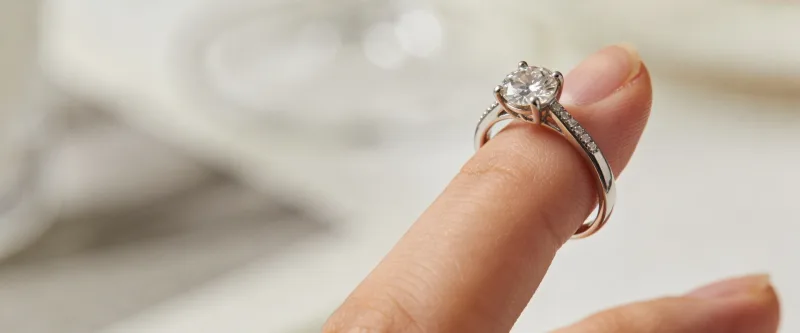
You have surely noticed these small rings worn at the top of the fingers, near the nail. This piece of jewelry has a name: the finger ring. It is also called a phalange ring, knuckle ring, or midi ring depending on the country. It slides onto the second or third phalanx and is distinguished from classic rings by its unusual position on the hand. Often fine and light, it effortlessly transforms the appearance of a hand. And if it is so popular on social media and in jewelry store windows, it's because it has experienced a true revival in recent years.
Where Does the Phalange Ring Come From?
Contrary to what one might think, this piece of jewelry is not new. Its origins date back to ancient Egypt, over 3,000 years ago. Pharaohs already wore rings adorned with snakes and sacred scarabs on their upper phalanges. These ornaments symbolized power and the protection of the gods.
Centuries later, during the Renaissance, this type of ring can be found in portraits of European nobility. Between the 15th and 16th centuries, high-ranking men and women wore rings above the joint. The message was clear: wearing jewelry at the tips of the fingers proved that one did not need to work with their hands. A class privilege, in short.
Then the jewelry was forgotten for a long time. It wasn't until the 2010s that the knuckle ring made a strong comeback, this time worn by American stars. Rihanna was one of the first to adopt the style, layering several midi rings in a look that was both rock and sophisticated. Beyoncé and Nicole Richie followed. In France, the trend arrived very quickly and has never really stopped.
Why This Enthusiasm for the Finger Ring?
What appeals about this jewelry is its ability to adapt to everything. A basic pair of jeans? It gives it character. An evening dress? It adds that little touch of originality that makes a difference. Bohemian, rock, classic chic, or minimalist: the phalange ring blends into any style of clothing. Its small size also makes it very comfortable for everyday wear.
Another strong point: the freedom it offers. While a wedding ring stays fixed on the same finger for life, the midi ring travels. You can move it from one finger to another depending on your mood of the day. You can wear just one, discreet, almost invisible. Or stack five or six to create a very personal composition. This stacking technique (the accumulation of fine rings) is actually part of the key jewelry trends for 2025 and 2026.
How to Wear a Finger Ring?
No rules set in stone. That's what makes the game interesting. Here are three proven ways to do it.
Solo Style: Focus on Simplicity
This is the most accessible. Choose one finger (the index or middle finger works well) and place your phalange ring there. The rest of the hand can accommodate traditional rings worn at the base of the fingers. This offset between the two levels creates a very elegant effect. No need to do more: the jewelry speaks for itself.
Triangular Style: Create Movement on the Hand
This one requires a little more thought. The idea is to place a finger ring on the middle finger, at the level of the second phalanx, then two classic rings on the index and ring fingers. If you mentally connect the three rings, you get a triangle pointing upwards. Result: the hand appears longer and the whole gives off something graphic.
The inverted triangle works too. Two midi rings on the outer fingers, a classic ring in the center. It's up to you to test what you like best.
2-in-1 Style: Two Rings on the Same Finger
For those who want to assert a stronger look, this option consists of layering two phalange rings on the same finger, each at a different level. This exercise requires a minimum of harmony between the pieces. It's better to choose models that complement each other in terms of metal and thickness rather than mixing everything and anything. When well-balanced, the result is sure to catch the eye.
What Materials and Styles to Choose?
925 silver remains a safe bet. Its natural shine and reasonable price make it a popular choice. Yellow gold has dominated jewelry runways for several seasons. If the budget doesn't allow, gold plating gives a very similar visual effect for a fraction of the price. Stainless steel is also worth considering: hypoallergenic, it suits reactive skin and withstands daily wear well.
In terms of shapes, there is no shortage of options. Smooth and fine rings appeal to lovers of sobriety. Models set with stones (turquoise, rose quartz, lapis lazuli) add a highly sought-after bohemian touch. Those who prefer a more rock spirit will turn to snake, arrow, or skull rings. And for the bolder, articulated rings that cover several phalanges connected by a chain add a spectacular dimension.
A Few Precautions Not to Overlook
This jewelry is charming but has one flaw: its position at the tip of the finger makes it more vulnerable. When washing hands, the phalange ring can slip off unexpectedly. Watch out for the sink. Soap, dish liquid, and acidic juices like lemon can also damage certain metals. The smart reflex: take it off before heading to the kitchen. Stainless steel models withstand these aggressions better, making them a good choice for intensive use.
Another point to watch: size. A ring that is too loose will fall off at the first movement. Too tight, it will hinder finger flexion. The trick is to try the jewelry precisely where you intend to wear it and not hesitate to opt for an adjustable model if you're unsure of your size.
From Egyptian pharaohs to today's streetwear looks, the finger ring has traversed the centuries while constantly reinventing itself. Whether you love clean minimalism or bold accumulation, there is surely a midi ring that will suit your hands. So, how do you wear yours?