Yellow gold transcends the ages without ever going out of style. Its warm hue evokes both tradition and modernity. But with multiple options, metal quality, diamond shape, and setting style, the choice can seem complex. Here is a complete guide to selecting the ring that will accompany a lifetime.
Yellow Gold, a Choice of Timeless Authenticity
Yellow gold is primarily a story of authenticity. Unlike white gold, which requires specific alloys and rhodium plating, it retains its natural hue without treatment. This simplicity is increasingly appealing to couples today.
Its great comeback can be explained by very concrete reasons. First, its durability. This metal withstands scratches and daily wear remarkably well. Next, its patina. Over time, a slight wear develops, adding character without altering the beauty of the jewel.
What about skin tone? Yellow gold particularly flatters tanned, golden, or olive skin. It creates a natural, almost obvious harmony. But light skin can wear it just as well. The contrast then becomes striking, pronounced. In the end, it's your feeling that matters.
Deciphering Carats: 18K, 14K, or 10K
The caratage determines three essential elements: durability, color, and price. In jewelry, pure gold is never used. Too soft, it cannot be worked properly.
18K gold contains 75% pure gold. It is the absolute reference of major jewelry houses. Its color is rich, deep, and luminous. Its durability? Exceptional. It is the best balance between purity and resistance.
14K gold contains 58.3% pure gold. More resistant, more affordable too. Its hue remains beautiful, albeit slightly paler. In the United States, it is the standard. An excellent value for a daily ring.
10K gold contains only 41.7% gold. Its color leans towards light beige. The alloys, which are very present, can cause allergic reactions. It is considered less noble, less suitable for an exceptional piece of jewelry.
For a ring meant to last decades, 18K gold is essential. It's an investment worth making.
What Diamond Shape to Choose
The shape of the diamond radically transforms the character of your ring. The trends for 2026 favor certain cuts.
The round brilliant cut still reigns supreme. With its 57 facets calculated to the millimeter, it maximizes brilliance. Timeless, universally appreciated. On yellow gold, the contrast is striking: the warmth of the metal meets the brilliance of the diamond.
The oval is experiencing a meteoric rise. It elongates the finger, appearing more voluminous than it actually is. Its vintage look marries wonderfully with yellow gold. Georgina Rodríguez, partner of Cristiano Ronaldo, has helped popularize this shape with her impressive diamond.
The marquise is making a strong comeback. Long shunned, it is regaining its nobility today. Its elongated silhouette brings originality and elegance. It dramatically elongates the finger.
The cushion evokes the charm of antique diamonds. Its rounded corners and wider facets create a soft, romantic brilliance. Taylor Swift chose this cut for her ring: a 10-carat off-white diamond on a richly adorned yellow gold setting.
The princess is appealing due to its graphic design. Its clean lines and contemporary look create an interesting contrast with the warmth of gold.
In case of doubt? The round remains the safest choice. Statistically, it is the favorite.
The Little-Known Trick of Yellow Gold
Here’s an advantage that few people know. Yellow gold allows for real savings while obtaining a beautiful ring.
How? By perfectly matching with diamonds of warm tones. The stones classified J, K, or L on the GIA scale have slightly yellow undertones. On white gold, these nuances would be visible, sometimes bothersome. On yellow gold? They disappear completely.
The warmth of the metal masks the warm tones of the stone. You can choose a larger or purer diamond for the same budget. This synergy is remarkably effective.
Off-white diamonds are even becoming trendy. Their soft brown or yellow hues bring warmth and character. Each stone has a unique shade. Your jewel becomes truly personal.
Mounting Styles that Enhance Yellow Gold
The mounting style reveals the personality of the one who will wear the ring. Several options are available to you.
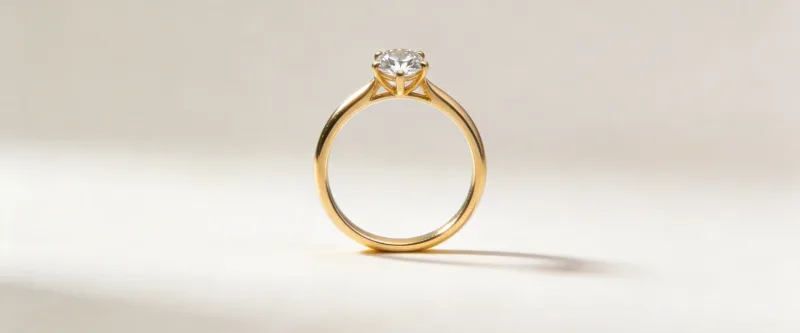
The classic solitaire focuses on the essentials. A single stone, four or six prongs, no superfluous additions. On yellow gold, the effect blends tradition and warmth. This style suits women who cultivate elegant discretion.
The pavé solitaire adds small diamonds on the band. These additional stones enhance the brilliance without falling into ostentation. Yellow gold brings a vintage dimension, an added soul.
The halo solitaire surrounds the central stone with small diamonds. Guaranteed optical effect: the central diamond appears larger. Yellow gold adds presence and generosity to this sophisticated design.
The shoulder solitaire features stones on either side of the central diamond. This balanced composition appeals to vintage lovers. The three stones symbolize the past, present, and future.
Creative rings break away from the beaten path. Asymmetrical designs, unusual settings, original shapes. Yellow gold, with its volume and presence, lends itself beautifully to sculptural mountings.
The trend for 2026? Solid gold mountings with assertive volumes. These structured designs provide a strong visual presence. Miley Cyrus's ring perfectly illustrates this movement: a cushion diamond on a generous yellow gold setting.
Measure the Ring Size Discreetly
Knowing the size without raising suspicion requires a bit of cunning. The average size is between 50 and 54 millimeters. But every hand is unique.
First method: borrow a ring she wears on her left ring finger. Place it on a sheet, trace the inner contour. A jeweler will determine the exact size.
Second option: measure the inner diameter of an existing ring. Maximum precision is required.
A third, bolder technique: discreetly wrap a string around her finger while she sleeps. Mark the length, then measure. Composure is necessary.
In case of doubt, opt for a slightly larger size. Reducing a ring is simpler than enlarging it. Fingers swell at the end of the day and in hot weather. A comfortable size remains preferable.
Most jewelers offer a free resizing service after purchase. You can adjust if necessary.
The Budget: Balancing Quality and Realism
The financial question remains delicate but unavoidable. In Europe, the recommended range is between one and two months' salary. This amount allows for the purchase of a quality ring without compromising your finances.
What matters less is the absolute amount than the quality of the jewel and the emotion it conveys. An 18K gold ring with a certified diamond, even modest, will always be worth more than an imposing but mediocre piece.
Project yourself. Will your fiancée still wear this ring in twenty years? A timeless piece in 18K yellow gold will traverse the decades with elegance. A choice that is too economical risks disappointing over time.
In case of hesitation between two pieces, it is better to pleasantly surprise. Your future wife will appreciate the attention given to this symbol of commitment.
Maintenance: Simple and Effective
18K yellow gold remarkably withstands the test of time. Unlike white gold, which requires periodic re-rhodium plating, it naturally retains its color. A slight patina may develop. It adds character without altering beauty.
To clean your ring, prepare a solution of warm water and mild soap. Let it soak for a few minutes. Gently scrub with a soft-bristled toothbrush, especially around the setting where dirt accumulates. Rinse with clear water. Dry with a soft cloth.
Avoid contact with harsh chemicals. Bleach, pool chlorine, household products: all enemies of your ring. Remove it before applying hand cream, perfume, or hairspray. These products tarnish the metal and dirty the diamond.
Store your ring separately in a fabric-lined box. Yellow gold is indeed durable. But repeated friction against other metals creates marks.
An annual visit to your jeweler is recommended. Check the setting, ensure no prong is loose. A professional polish can restore its shine.
The Wedding Band: Anticipating Harmony
Your engagement ring will be worn daily with your wedding band. This layering deserves reflection right now.
The classic option? A yellow gold wedding band of the same hue. This consistency creates a harmonious visual unity. Ensure both rings fit comfortably together. A stone that is too low may rub. A very elevated stone will leave a gap.
Fitted wedding bands offer an elegant solution. Designed to fit perfectly, they contour around the central stone's setting. Some jewelers create custom curved wedding bands.
The creative alternative? A rose or white gold wedding band. Intentional two-tone effect, bold personality. This daring approach remains elegant.
Authenticity: Hallmarks and Certificates
A genuine gold jewel must bear a state hallmark. For 18K gold, this hallmark takes the form of a tiny eagle's head engraved on the ring. This symbol certifies that the metal contains 75% pure gold.
A diamond over 0.3 carats requires its laboratory certificate. Issued by GIA or HRD Antwerp, this document details the stone's characteristics according to the 4Cs: carat weight, color, clarity, and cut quality. It's its identity card.
Keep this certificate safe. Essential for insuring your ring, it will attest to its value in case of resale or inheritance.
Mistakes to Avoid at All Costs
Some common mistakes can compromise your purchase. The first mistake: choosing 9 or 14K gold for an engagement ring. These alloys do not withstand the test of time as well. They can cause allergic reactions.
The second trap: focusing solely on the size of the diamond. A 1-carat diamond of poor quality will have less brilliance than a 0.7-carat diamond of superior quality. Always prioritize a minimum quality of HSI. Brilliance and whiteness guaranteed.
The third error: neglecting the everyday aspect. Your future wife will wear this ring every day. An overly extravagant design may become tiresome. In case of doubt, prioritize sobriety and timeless elegance.
The fourth oversight: comfort. A ring that hurts, snags on clothing, or hinders movement will end up in a drawer. Test the comfort of the setting before deciding.
Yellow Gold vs. Other Metals
White gold remains the most popular choice. About 50% of purchases. Its neutrality enhances all diamonds. The downside: it requires re-rhodium plating every two to three years to maintain its silver shine.
Rose gold accounts for 25% of purchases. Its romantic and feminine hue particularly suits light skin. It naturally retains its color without treatment.
Platinum offers impressive longevity. This metal never oxidizes. Its higher cost is due to its rarity and the amount needed to create a ring. Prestigious, indeed. But not necessarily superior to 18K gold.
Yellow gold accounts for 10% of purchases. It appeals with its authenticity and timeless character. It transcends trends without ever going out of style. A bridge between tradition and modernity.
Where to Buy Your Ring
Prefer certified RJC jewelers. This certification guarantees ethical and responsible practices. Major houses offer iconic creations. Tiffany, Cartier, Van Cleef. Exceptional quality, high prices.
Independent jewelers often offer excellent value for money. Personalized service, custom pieces perfectly tailored to your wishes. An option not to be overlooked.
Specialized online platforms allow for easy comparison. Ensure they offer authentic certificates and a clear return policy.
Whatever your source, always demand the diamond certificate. Check for the presence of the state hallmark on the metal. Take the time to compare. Ask all your questions.
Yellow Gold, a Choice That Transcends Time
Choosing a yellow gold engagement ring means opting for a metal that has traversed the centuries without losing its prestige. Its warm hue creates a natural harmony with diamonds of warm tones. You optimize your budget while obtaining a beautiful jewel.
Between the caratage (favor 18 carats), the diamond shape (round, oval, or cushion according to your style), the mounting style (from classic solitaire to sculptural designs), and determining the size, each decision contributes to creating a unique jewel.
Yellow gold requires no special treatment to maintain its beauty. This ease of maintenance, combined with its exceptional durability, makes it a pragmatic choice for a piece of jewelry worn daily.
A natural diamond formed at the heart of the Earth over billions of years finds its ideal setting in pure gold in its authentic form. This alliance between two natural treasures creates a symbol of love that will transcend generations. It will accumulate patina and memories over the years, a silent witness to a unique love story.